


With the national rental vacancy rate at 7.3% in the first two quarters of 2026 (US Census Bureau), filling units quickly is one of the clearest ways to protect your income.
What are rental property management apps?
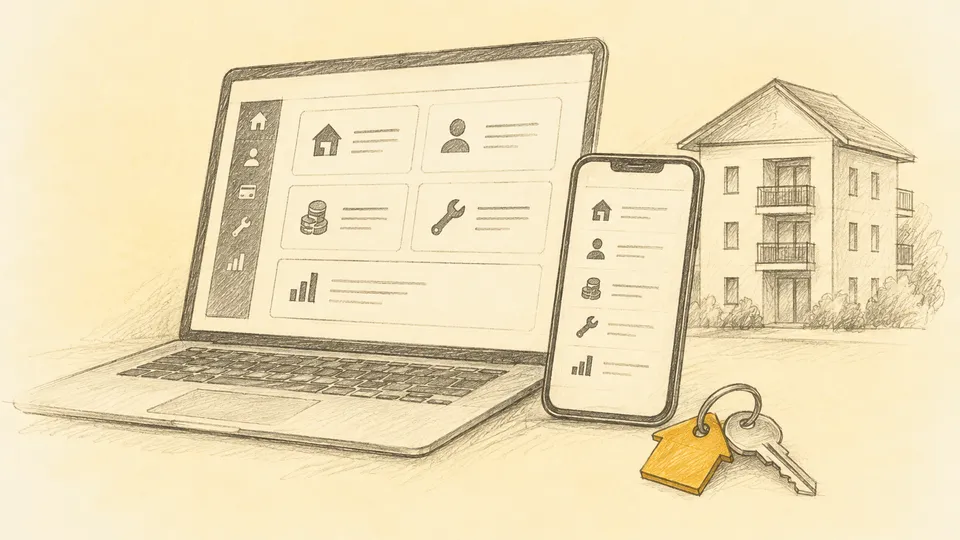
Property management apps are software platforms that centralize the day-to-day work of renting out housing. They replace spreadsheets, paper leases, and scattered inboxes with a single system for advertising units, screening applicants, collecting rent, and tracking maintenance.
The US has around 46.1 million rental households (RentPost). Whether you own one duplex or manage hundreds of units, the operational tasks are similar: list a vacancy, field inquiries, qualify applicants, sign a lease, collect rent, handle repairs, and keep records.
What features should a landlord look for in a property management app?
Look for the features that match the tasks eating most of your time. Most apps cover several of these categories, but few cover all of them.
Listing syndication. The app publishes your vacancy to rental search sites so you do not have to post manually on each one. The number of sites varies widely by platform.
| Platform | Sites it syndicates to | Source |
|---|---|---|
| TurboTenant | 26 listing sites | TurboTenant |
| Avail | 19+ listing sites | Avail |
| Zillow Rental Manager | Zillow, Trulia, and HotPads | Zillow |
Tenant screening and applications. Most apps let applicants apply online and run credit, criminal, and eviction checks.
Rent collection. Online payment portals with ACH or card options. Late rent payments are a top operational challenge for 41% of property managers (RentPost), so automated reminders and recurring payments help.
Maintenance tracking. Tenants submit requests through the app, and you can assign vendors, track status, and keep a record.
Accounting and reporting. Income and expense tracking, exportable reports for tax time, and owner statements for managed properties.
Communication. Email, in-app messaging, or text notifications for tenants and your team.
How do renters actually search today, and why does that matter for app choice?
Renters are mobile-first and use multiple platforms. Eighty-six percent of recent renters say at least one digital feature, such as a video walkthrough or an interactive floorplan, is essential during their search (Zillow 2026 CHTR).
In 2025, 81% of recent renters searched on a mobile website, up from 75% in 2024 (Zillow CHTR 2025). The typical renter used five different sites or apps during their search (Zillow CHTR 2025). Online applications grew from 51% in 2018 to 77% in 2025 (Zillow CHTR 2025).
This means your listing needs to appear on the sites renters actually use, your application process needs to work on a phone, and you need to be reachable on the channels renters prefer. An app that syndicates widely and accepts applications online covers the first two.
Can a property management app help me respond to leads faster?
Speed matters more than most landlords realize. Responding within five minutes versus 30 minutes makes you 21 times more likely to qualify a lead (AppFolio, citing MIT). Landlords responding within one to two minutes are up to 40% more likely to directly engage with a prospective renter (AppFolio, citing Zillow). Approximately 20% of prospective renters move on to other properties if a response takes 10 minutes (AppFolio, citing Zillow).
If your vacancy is costing you 1.5 to 2 times the monthly rent for each month it sits empty (LetHub, citing NARPM), every slow reply is expensive. Multifamily average time-to-lease was roughly 41 days in 2025 (LetHub, citing RentCafe).
What role does AI play in property management apps now?
According to the NAA/AppFolio 2025 Performance Ecosystem Report, 53% of property management professionals use general-purpose AI tools like ChatGPT and Gemini, and 43% use AI features embedded in their property management software (NAA/AppFolio).
The results are promising: 77% of companies report overall performance improvements driven by generative AI (NAA/AppFolio). At the same time, technology implementation has risen into the top three challenges for property managers (NAA/AppFolio).
One barrier is fragmentation. Sixty-seven percent of leaders agree that consolidating data into a single platform is essential for improving performance (NAA/AppFolio).
How do I choose the right app for my portfolio size?
For one to ten units, a free-tier app usually covers the basics: listing syndication, online applications, rent collection, and maintenance requests. The main cost is your own time handling communication and showings.
For 50 or more units, look for apps that support team logins, role-based permissions, and integrations with your accounting software. The bigger the portfolio, the more important it is that your tools connect to each other instead of creating separate silos.
At every size, consider what happens between the listing and the signed lease: answering calls, qualifying renters, scheduling showings, and following up.
What should I watch out for?
Tenant-paid fees. Ninety-three percent of renters say staying within budget is essential (Zillow 2026 CHTR), so unexpected fees add friction.
Data portability. Before you commit, check whether you can export your tenant records, lease documents, and financial data. A platform that locks in your data makes switching painful.
Contract terms. Some paid plans require annual commitments. Others bill month to month. Ask what happens to your data if you cancel, and whether there is an early termination fee.
What happens between the listing and the lease?
Answering phone calls, replying to texts and emails from prospective renters, qualifying leads, and scheduling showings are the tasks that happen between a renter finding your listing and you signing a lease. They are high-volume, time-sensitive, and hard to handle manually once you have more than a few vacancies at once. Nolan handles phone, text, email, and chat inquiries and connects to your existing property management software.
A property management app is the system of record. An AI leasing layer is what keeps the top of the funnel moving while you manage everything else.
FAQ
How many listing sites do property management apps syndicate to?
It depends on the platform. TurboTenant syndicates to 26 listing sites (TurboTenant), Avail syndicates to 19+ sites (Avail), and Zillow Rental Manager publishes to Zillow, Trulia, and HotPads (Zillow). Since the typical renter uses five different sites or apps during their search (Zillow CHTR 2025), wider syndication increases your chances of reaching them.
How fast do I need to respond to rental leads?
Responding within five minutes versus 30 minutes makes you 21 times more likely to qualify a lead (AppFolio, citing MIT). Landlords responding within one to two minutes are up to 40% more likely to directly engage with a prospective renter (AppFolio, citing Zillow). Approximately 20% of prospective renters move on to other properties if a response takes 10 minutes (AppFolio, citing Zillow).
How much does a vacant rental unit cost me?
Each month of vacancy costs an owner 1.5 to 2 times the monthly rent once carrying costs and re-leasing expenses are counted (LetHub, citing NARPM). Multifamily average time-to-lease was roughly 41 days in 2025 (LetHub, citing RentCafe), so any delay in responding to leads or scheduling showings adds directly to that cost.
Are property managers actually using AI?
According to the NAA/AppFolio 2025 Performance Ecosystem Report, 53% of property management professionals use general-purpose AI tools like ChatGPT and Gemini, and 43% use AI features embedded in their property management software. Seventy-seven percent of companies report overall performance improvements driven by generative AI (NAA/AppFolio).